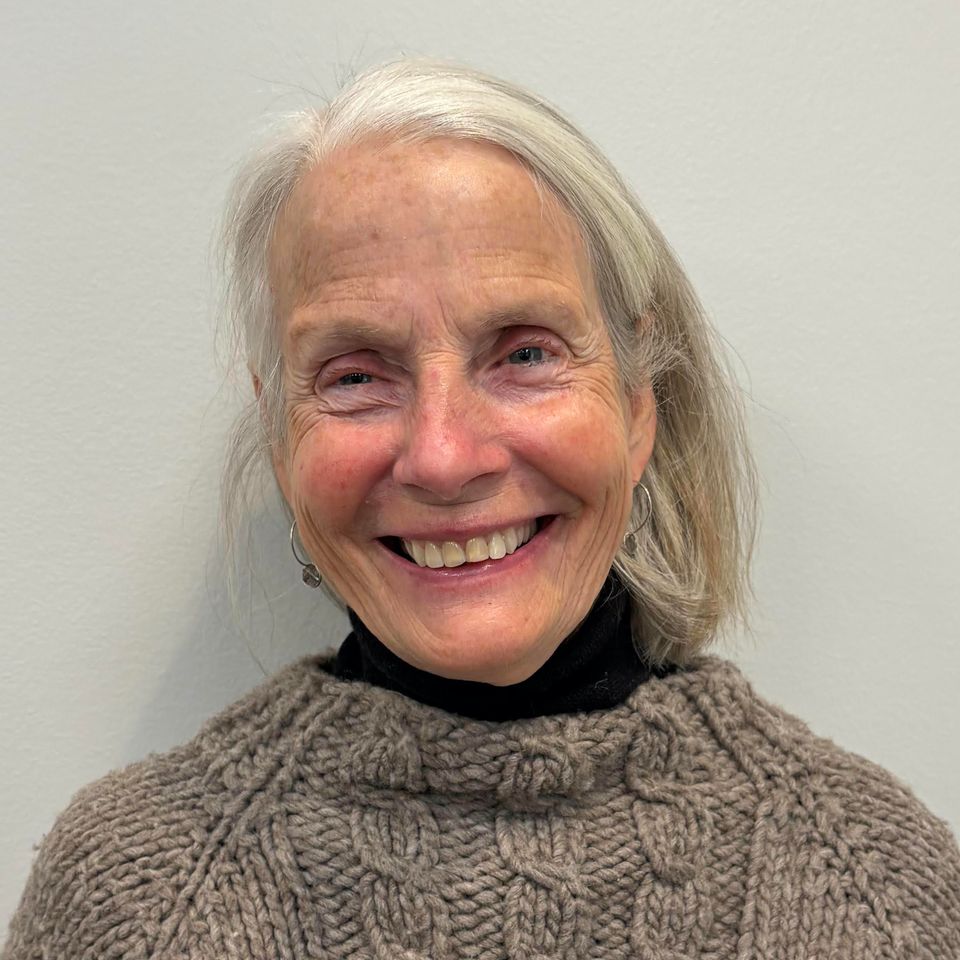
Thoughts from our Chair
Nov. 5, 2026
I left the Election Day watch party feeling dejected by the roller coaster ride of watching the poll numbers swing in Shannon Taylor's direction, then suddenly swing toward Wittman. I could not face what I feared was a defeat. Yesterday morning, when I looked at my phone and saw she had beaten Wittman by a sizable margin, I was overcome with emotion. My universe changed in an instant and continued to do so as I read of one record-breaking victory for Democrats after another. I wanted to send out this email earlier yesterday, but the words to describe what happened were insufficient. One headline read, "Decency prevailed."
Yesterday morning, I joined the members of our electoral board to observe their canvassing and processing of absentee ballots. Provisional ballots will be "cured" by Friday afternoon, then the election will be certified. Below are the current results in CD1 and then in Mathews for the House race.
District 1
Shannon Taylor 51.04% 207, 882
Rob Wittman 48.72%. 198, 417
Mathews
Shannon Taylor 32.32% 1, 537
Rob Wittman 67.57%. 3, 213
Below are the current statewide vote counts of the three Constitutional amendments that were on the ballot. Needless to say, the nays outnumbered the yeas in Mathews, though the first amendment question fared better. I credit the positive outcome to the MCDC's postcard campaign directed at female and non-binary voters in Mathews.
Question 1
Yes 62.47% 2,194,746
No 37.53% 1,318,370
Question 2
Yes. 57.49% 2,037,801
No 42.51% 1,506,749
Question 3
Yes 56.56% 2,001,018
No 43.44% 1,536,781
Wittman Watch has published great letters with interesting statistics for those interested in a deeper dive. We the People is today's post. Ed Donohue reminded me of the percentage change that provides some promise. Thanks for the encouragement!
Democrats took control of both chambers of Congress, marking, asPeter Baker of The New York Times wrote, "the beginning of the end of the Trump era." It was also a night of firsts-
- the first Muslim senator Abdul-El-Sayed of Michigan)
- the first Black female governor (Keisha Lance Bottoms of Georgia)
- the first openly gay male senator (Chris Pappas of New Hampshire)
- the first Hispanic governors in Texas (Dina Hinojosa) and California (Xavier Becerra)
- the first female governor of Ohio (Amy Acton)
- the first Black governors of Florida (Byron Donalds) and Wisconsin (David Crowley)
- the first female Native American governor (Deb Haaland of New Mexico
- and if Hakeem Jeffries is picked by his fellow Democrats to lead the House, he will be the first Black speaker.
Speaking of Keisha Lance Bottoms, Molly Broderson shared this story from Tuesday's front page of the Atlanta Constitution:
In 1860, an enslaved man named Sheppard Peek was listed among the possessions of William Peek, a white man in Crawfordville. His value was placed at $1,400. On another surviving document, Sheppard signed his name with an X. More than a century and a half later, Sheppard’s great-great-granddaughter, Keisha Lance Bottoms, is Georgia’s governor-elect.
Tuesday's election was a repudiation of the oppressive ideology and scandalous attempts of the Trump administration to eviscerate the institutions that are the pillars of our democracy. Jamie Raskin, in his interview yesterday, stated that this blue wave is one of accountability, but also requires an effective response to the effects of Trump's policies and indifference to the very real needs of Americans who cannot afford groceries, fuel, electricity, and healthcare.
This tremendous victory was won through all the hard work Mathews Democrats put in writing letters to the editor, writing postcards, making phone calls, canvassing, hosting candidate forums and events, organizing candidate forums and events, setting up and organizing tabling events, distributing yard signs and coordinating to get them strategically placed, designing postcards and ads, greeting visitors to our table at the Mathews Farmer's Market, creating opportunities through scholarships, making donations to Hands Across Mathews and organizations that protect our democracy, improving communications through our webpage and Facebook, managing our finances and communications, and volunteering your many skills and talents to the cause. Thank each and every one of YOU!
So, speaking of yard signs. Save the Shannon Taylor signs in the event she runs again. Sheila and I are happy to house these, so bring them to the November meeting. Warner is not running again, so the polybags can be recycled. The metal frames can be reused. The corrugated signs can be converted to protest signs. Kent suggested we paint a BLUE WAVE on them. The dark background with white lettering makes for good protest signs.
And bring your ideas on how to strategically move forward to our next MCDC meeting on November 21 at 10:00.
With so much gratitude,
Butler, chairperson
Executive Order changes federal framework for Bay cleanup
The most recent issue of the Bay Journal, October 2026, reports on Trump's September 16 Executive Order, which alters the federal role in the cleanup of the Bay.
Wittman's response to the order is not mentioned AT ALL. Probably because he didn't give a response. Since the vast majority of his district borders the Bay, that seems shortsighted. But the article is worth reading anyway.
U.S. Supreme Court Ruling: Louisiana vs. Callais
Gutting Section 2 of the Voting Rights Act
Project 2025 set out to protect the voting rights and representation of white Americans, especially in the South, where 80-85% of white voters vote Republican. The loss of Section 2 eliminates the possibility of representation of the 30% of Blacks within the South who historically vote Democrat.
The authors of the April 30, 2026, New York Times article, "How Did the Voting Rights Act Change Black Representation in 10 States?" stated that it was not until the passage of the Voting Rights Act of 1965 that the number of Black lawmakers in the U.S. House of Representatives increased. Louisiana has a dismal history of proportional representation, with this article noting that the first Black lawmaker elected to the House was in 1874, but not again until 1990. According to their analysis, with a Black population of 30%-50%, proportional representation would require at least two Black lawmakers elected to the House. Not surprisingly, the states without Jim Crow laws reflect a far different outcome.
Virginia had the foresight to know that the Voting Rights Act of 1965 was on perilous ground and took measures to enact laws to strengthen the voting rights of "protected classes" and allow for legal protections from organizations such as the NAACP that could represent them. HB967, approved on April 13, 2026, delineates these protections and provides assurances that voting rights in Virginia are now protected at the state level.
Democrats are fighting back!
Hope or Optimism?
"Optimism is the vague belief that things will probably work out. Hope is something more rigorous than that. Hope is the recognition that the future has not yet been finalized — and that we get a say in how the story ends. It is a claim about what is still possible, and it is a claim that American history validates again and again."
Sharon McMahon is an author, educator, and podcaster. She taught government and law in public schools in the Washington, D.C. area and wrote The Small and the Mighty. This book documents 12 little-known Americans who changed the world during the American Civil Rights movement.
Use the link below to read her full article, "The Case for Hope in an Exhausted America."Sh
But What Can We DO?
Posted by Inequality Media, Robert Reich, professor, author, lawyer, and political commentator, tells us the 5 things we can do to protect our democracy.
Reich served in the Ford, Carter, Clinton, and Obama administrations.
Mourning in America
What you can do to Organize
This is copied from an essay from Robert Reich (who I follow on Substack) on January 26. I love that he frequently has a list of things to do... Diane
Today we mourn the death-by-execution of Alex Pretti and Renee Good. I use the term execution intentionally because they were murdered intentionally by Trump’s goons. (I’ve seen the videos; I’m sure you have as well.)
At times like this, Gandhi used to say, “The truth is revealing itself.”
To show our grief and solidarity, you might want to wear a black armband this week and light a candle in your window this evening and for the remainder of the week.
But there is much more to do than mourn. As the labor leader Joe Hill asked in 1915 just before he was executed: “Don’t mourn … Organize.” The best way to honor the memories of Alex Pretti and Renee Good is to take action against the forces that executed both of them.
Obviously, your energies are needed in organizing your congressional district and your state for the midterm elections, and getting out the vote. (I’ll be back in coming months with detailed suggestions for how.)
But the midterms are nine and a half months away. In the meantime, Trump and his thugs can do a great deal of damage if not stopped. What can you do now?
A few action items occur to me:
1. Tell your U.S. senators to vote NO on the Department of Homeland Security spending bill they’ll be considering this week — unless ICE is disarmed and prohibited from using racial or ethnic profiling and its agents are explicitly liable to criminal prosecution and civil lawsuits. At the very least, DHS’s funding should be slashed. If DHS is shut down after January 30 because no spending bill has been enacted, so be it. (The congressional switchboard is: (202) 224-3121.)
2. If you’re represented by Republicans, call them and demand they rein in ICE. They need to hear from you. Some Republicans are beginning to come around. (Remember: They now have a margin of only 3 votes in the House.)
3. Urge your state attorneys general to join with other state AGs and to investigate ICE, the Border Patrol, and their leadership (Noem, Miller, Trump), with a view toward possible criminal prosecution. Trump cannot pardon them or protect them from state-level prosecutions. (You can locate the office of your state attorney general through the National Association of Attorneys General website or the USAGov directory. Most offices have official websites with online complaint forms, phone numbers, and mailing addresses for submitting consumer inquiries, complaints, or reports.)
4.. If ICE is coming to your city or is already there, call on your mayor and your state police to protect those protesting ICE.
5. Circulate a pledge in your community to oppose ICE if and when it arrives there. Aim for signatures from 10 percent of the adults residing there.
6. If you are a member of your local Indivisible group (or if you’re not a member, join one; or if there’s none in your community, start one), suggest a general strike. What might this entail? I can imagine three elements: (1) no one goes to work (call in sick), (2) no one buys anything (stock up beforehand), and (3) no one uses social media (except Substack). In coordination with other Indivisible groups and other resistance groups across America, decide what date and for how long. (Then let me know!)
7. Isolate the United States economically, even more than Trump is doing. If you live in an EU country, urge your government to activate the Anti-Coercion Instrument. The Trump regime represents a clear and present danger to the world, including the sovereignty of European nations. The Anti-Coercion Instrument in the EU would allow the sanctioning of Trump regime officials, freezing of assets of corporations benefiting from the theft of Venezuelan oil, and expulsion of U.S. forces from European bases.
8. Allow the U.S. dollar to fall. Under the Trump regime — which is actively trying to take over the Fed, America’s central bank, and is dissolving ties with the rest of the free world — the dollar is becoming a highly risky currency. It’s already falling. Allow it to fall further. If you work in a large global corporation, urge your top executives to do the firm’s international transactions in currencies other than dollars. If you are in a large financial institution, urge traders to dump dollars.
Clearly, this is an incomplete list of the peaceful “good trouble” we could make. If other actions occur to you, please share them with the rest of us in the comments.
Friends, have courage. Be strong. Hug your loved ones. Remember Alex Pretti and Renee Good. Please do not succumb to fear or despair. We will be victorious.
Today we mourn the death-by-execution of Alex Pretti and Renee Good. I use the term execution intentionally because they were murdered intentionally by Trump’s goons. (I’ve seen the videos; I’m sure you have as well.)
At times like this, Gandhi used to say, “The truth is revealing itself.”
To show our grief and solidarity, you might want to wear a black armband this week and light a candle in your window this evening and for the remainder of the week.
But there is much more to do than mourn. As the labor leader Joe Hill asked in 1915 just before he was executed: “Don’t mourn … Organize.” The best way to honor the memories of Alex Pretti and Renee Good is to take action against the forces that executed both of them.
Obviously, your energies are needed in organizing your congressional district and your state for the midterm elections, and getting out the vote. (I’ll be back in coming months with detailed suggestions for how.)
But the midterms are nine and a half months away. In the meantime, Trump and his thugs can do a great deal of damage if not stopped. What can you do now?
A few action items occur to me:
1. Tell your U.S. senators to vote NO on the Department of Homeland Security spending bill they’ll be considering this week — unless ICE is disarmed and prohibited from using racial or ethnic profiling and its agents are explicitly liable to criminal prosecution and civil lawsuits. At the very least, DHS’s funding should be slashed. If DHS is shut down after January 30 because no spending bill has been enacted, so be it. (The congressional switchboard is: (202) 224-3121.)
2. If you’re represented by Republicans, call them and demand they rein in ICE. They need to hear from you. Some Republicans are beginning to come around. (Remember: They now have a margin of only 3 votes in the House.)
3. Urge your state attorneys general to join with other state AGs and to investigate ICE, the Border Patrol, and their leadership (Noem, Miller, Trump), with a view toward possible criminal prosecution. Trump cannot pardon them or protect them from state-level prosecutions. (You can locate the office of your state attorney general through the National Association of Attorneys General website or the USAGov directory. Most offices have official websites with online complaint forms, phone numbers, and mailing addresses for submitting consumer inquiries, complaints, or reports.)
4.. If ICE is coming to your city or is already there, call on your mayor and your state police to protect those protesting ICE.
5. Circulate a pledge in your community to oppose ICE if and when it arrives there. Aim for signatures from 10 percent of the adults residing there.
6. If you are a member of your local Indivisible group (or if you’re not a member, join one; or if there’s none in your community, start one), suggest a general strike. What might this entail? I can imagine three elements: (1) no one goes to work (call in sick), (2) no one buys anything (stock up beforehand), and (3) no one uses social media (except Substack). In coordination with other Indivisible groups and other resistance groups across America, decide what date and for how long. (Then let me know!)
7. Isolate the United States economically, even more than Trump is doing. If you live in an EU country, urge your government to activate the Anti-Coercion Instrument. The Trump regime represents a clear and present danger to the world, including the sovereignty of European nations. The Anti-Coercion Instrument in the EU would allow the sanctioning of Trump regime officials, freezing of assets of corporations benefiting from the theft of Venezuelan oil, and expulsion of U.S. forces from European bases.
8. Allow the U.S. dollar to fall. Under the Trump regime — which is actively trying to take over the Fed, America’s central bank, and is dissolving ties with the rest of the free world — the dollar is becoming a highly risky currency. It’s already falling. Allow it to fall further. If you work in a large global corporation, urge your top executives to do the firm’s international transactions in currencies other than dollars. If you are in a large financial institution, urge traders to dump dollars.
Clearly, this is an incomplete list of the peaceful “good trouble” we could make. If other actions occur to you, please share them with the rest of us in the comments.
Friends, have courage. Be strong. Hug your loved ones. Remember Alex Pretti and Renee Good. Please do not succumb to fear or despair. We will be victorious.

Axioms for Interpreting Trump
The following is copied from an email sent to subscribers of Robert Reich, January 22, 2026. I found him on Substack and subscribed. He is quite progressive in his positions, but this is just plain common sense.
Thought you might be interested. Diane
As Trump’s dementia worsens, several axioms are useful for interpreting his increasingly incoherent bloviation.
Axiom #1: Whatever he asserts to be a fact is either a wild exaggeration or a bald-faced lie. Always disregard.
Axiom #2: Whatever he blames on anyone else is something he’s done. He projects like mad, so his accusations are always windows into what he’s worried that others will discover about himself.
Axiom #3: Whatever he criticizes as being fake news is a fact he doesn’t want you to know. So pay special attention to it.
Axiom #4: Whenever he attacks some source of information — a survey, poll, or report — it’s come up with some truth he fears. So look at it and share it.
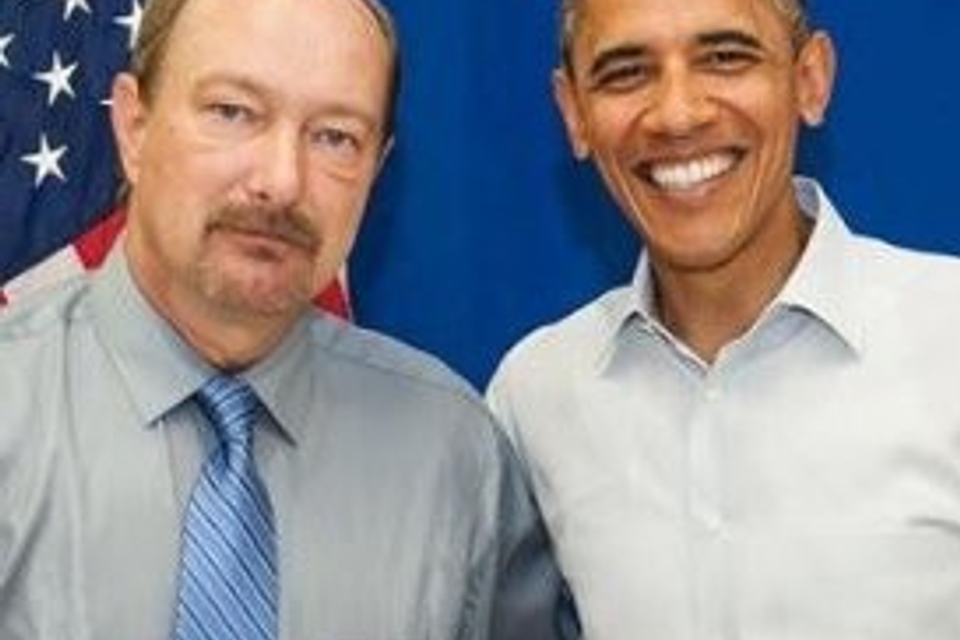
Bud Ward with President Obama
Bud Ward worked at Anheuser Busch in Williamsburg starting in 1982. He was a proud member of the International Brotherhood of Teamsters.
Bud was active in the Mathews Democratic Committee for many years and became chair in 2012. He also became vice chair for the Southeast Region of the Virginia Democratic Party in 2012.
Under Bud’s leadership, our annual Crab Steam grew to be one of the most successful fundraisers of rural Democratic Committees in the state. He was well known among Democratic leaders across the state and was close friends with former Governor Ralph Northam. He completed his tenure as chair of the Mathews committee in 2020, but continued to be active in local and state Democratic affairs.
In recent years, Bud became an integral part of the effort to tell the story of the Black Exodus from Gwynn’s Island. He helped form the association of the descendants of Black people who were enslaved by Gwynn’s Island white families and who lived and worked on Gwynn’s Island after emancipation. The first reunions of the descendants were held on Bud’s property on the Piankatank River. He was so determined that the historic marker commemorating the Black Exodus from Gwynn’s Island be located on the island that he offered his property as the place for it to be installed. It is a fitting tribute to Bud that this historic marker will be erected in front of his house on Old Ferry Road.
Bud was an unapologetic champion of all principles and priorities of the Democratic Party in a place where not too many people agreed with him. He loved Mathews County nonetheless.
But What Can We DO?
Posted by Inequality Media, Robert Reich, professor, author, lawyer, and political commentator, tells us the 5 things we can do to protect our democracy.
Reich served in the Ford, Carter, Clinton, and Obama administrations.